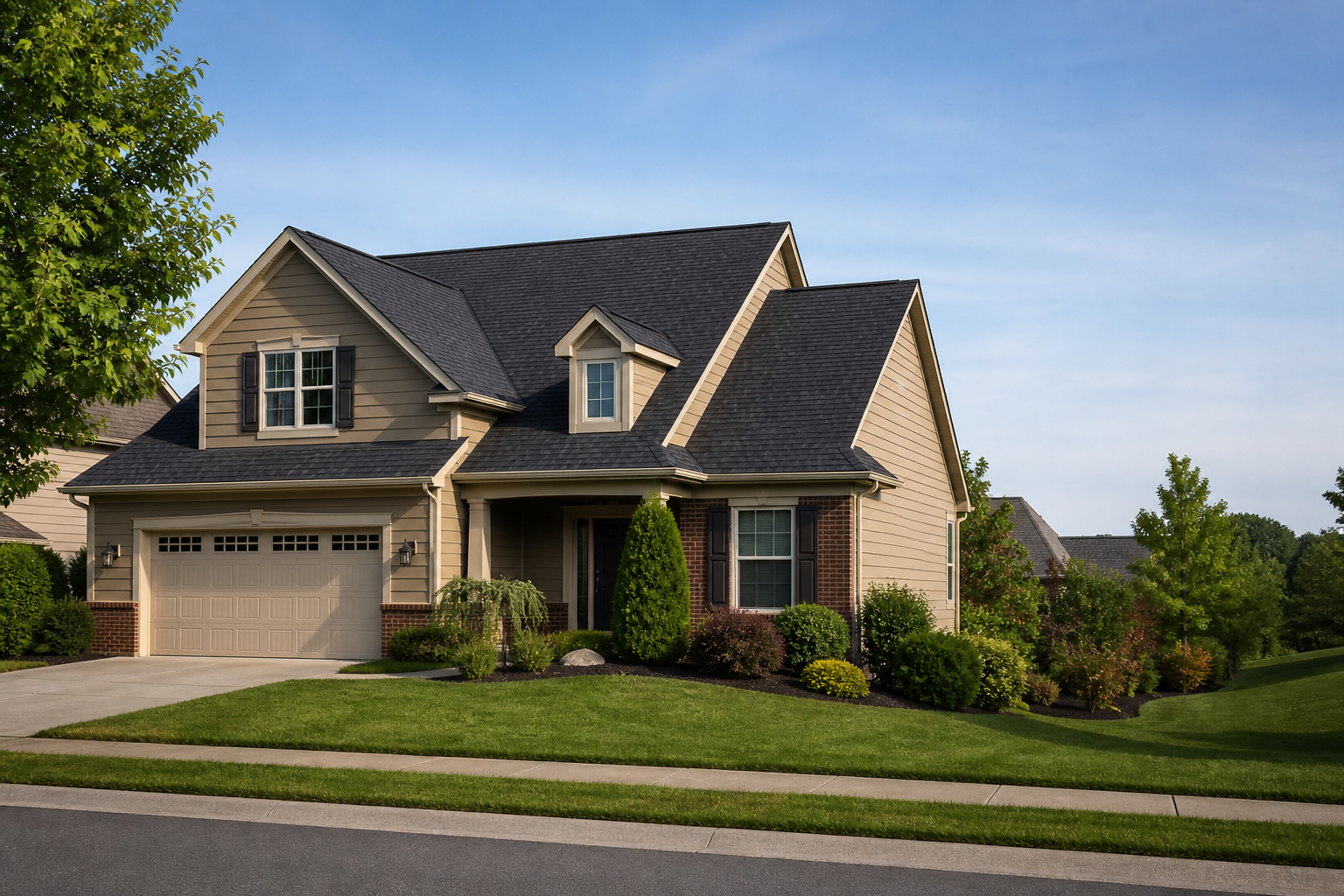
Wind damage on Linden's residential streets
Straight line wind and the occasional nor'easter pull vinyl siding loose across Linden and the surrounding towns most years. Panels nailed too tight crack because they cannot flex with temperature changes, while panels nailed too loose or without enough fasteners lift and unzip along the interlocking edge during a strong gust. Damage tends to start at the corners and on whichever wall faces the prevailing wind.
A single blown off panel is usually a quick fix if the same profile and colour are still being made. Older or discontinued siding profiles are harder to match, and sometimes the more honest answer is re-siding one full wall rather than patching in a near match that will always look slightly off.
Choosing between vinyl and fibre cement
Vinyl remains the most common choice across Linden and Elizabeth because it is affordable and never needs repainting. Its weak points are wind, impact damage from a stray baseball or a mower, and warping if a dark colour absorbs too much heat or if a neighbouring window reflects concentrated sunlight onto one section.
Fibre cement costs more up front and is heavier to install, but it holds paint for well over a decade, resists hail better than vinyl, and does not warp from heat. It suits the older two family homes near downtown Elizabeth particularly well, where matching an existing wood siding look matters more.
What is behind the siding matters more than the siding
On a full re-side we strip back to the sheathing, repair any rot found underneath, and install house wrap taped at every seam with every window and door flashed using a self adhered membrane. That layer is what actually keeps the wall dry for decades. New siding installed straight over old sheathing with no wrap underneath is a wall that will rot from the inside regardless of how good the panels look.
The junction where siding meets the roof
A large share of the leaks we trace on siding calls actually start where a roof edge meets a wall, and the siding was run tight against the shingles with no kick out flashing directing water away from the wall. Any siding job we do near a roofline gets that detail checked and corrected, since it is a cheap fix compared to the water damage it prevents.